Match a recall to the label, not the product photograph
A recall photograph can resemble several generations of the same baby product. The decisive details may be a model code, manufacture date, accessory or retailer. Learn how to compare those identifiers and follow the official remedy without treating a familiar picture as proof that a product is unaffected.
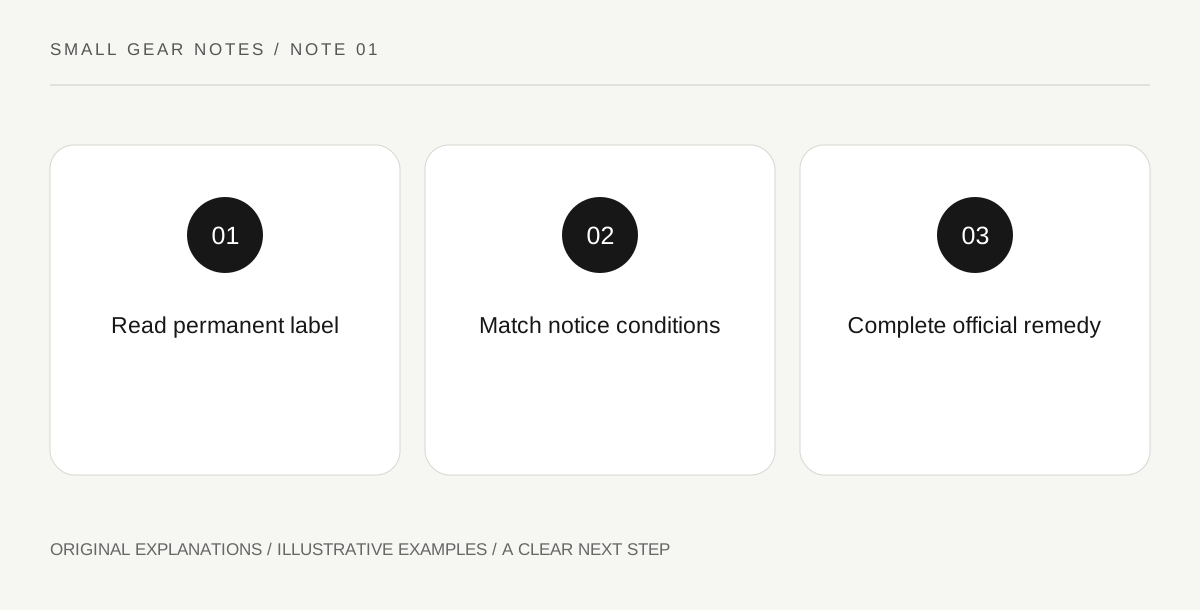
Original explanatory diagram. Read the full method and limitations below.
Build the identity before searching
Find the permanent product label while the item is empty and stable. Photograph its model number, manufacture date, serial or lot code and manufacturer name, keeping every letter and punctuation mark readable. A retailer's listing title may describe a whole collection, while the label identifies the unit you own. If the item includes a removable seat or other accessory, look for a separate identifier there as well. Keep an order receipt as additional evidence, but do not substitute an approximate purchase date for a required production date.
Read the affected range and hazard
Open the official recall notice and compare its description, codes, date ranges and identifying features as a set. A product can share a name with an affected model yet fall outside the specified manufacturing range; the reverse can happen when a recalled item was sold under more than one listing name. Read the hazard before using the product again. The problem may involve an accessory or unexpected mode of use, so a quick glance at the frame is not an adequate comparison.
Keep a simple comparison note with two columns: the identifier printed on your item and the identifier or range in the notice. Record an uncertain character as uncertain instead of silently choosing the version that makes the product seem unaffected. If a notice covers only an accessory, document whether that accessory is actually present and what the remedy says about the remaining product. This makes a support conversation more precise and helps another caregiver understand why use has stopped while an answer is pending.
Follow the remedy exactly
The recall's remedy section explains whether to stop use, contact the company, request a repair, obtain a refund or take another specified action. Do not invent a fix from a photograph of the failed component. A recall repair kit is different from a general replacement part, and some recalls require particular evidence before the company processes a claim. Preserve the information needed for the remedy while keeping the product unavailable to children. Follow disposal instructions when provided rather than passing a hazardous item to another family.
Resolve an unreadable or conflicting label
If a seller's description and the physical label disagree, pause the purchase or use and contact the manufacturer through independently verified details. Send clear photographs and describe the conflict without guessing the missing character. Searching the recall database is useful, but an empty result does not certify a product's condition, assembly or compliance. Register eligible durable products and keep contact details current so later notices have a way to reach you. Repeat the identity check when buying another unit, even if it looks identical.
A date changes the answer
Illustrative example: a listing says a rocker was bought last summer, but its label shows a much earlier production date. The caregiver compares the model and production range in the CPSC notice, discovers the unit is included and follows the stated stop-use remedy. The seller's purchase story does not override the label.
Practical checks
Optional checkboxes save only in this browser.
Questions that come up
Does no search result mean a product is safe?
No. A recall search addresses known published actions, not hidden damage, missing hardware, incorrect assembly or every possible hazard. Use the manual and condition checks as well.
Should I repair the defect myself?
Use only the remedy the recall specifies. A homemade repair can leave the original hazard unresolved and can interfere with the manufacturer's process.
References and scope
These sources support the factual background. Examples and exercises are original illustrative teaching material. References do not imply endorsement.
- CPSC recall database — Exact product identification, affected production ranges and official remedies.
- CPSC durable infant or toddler products — Product categories, registration and mandatory safety requirements.