Separate a baby monitor's convenience features from medical claims
An app can show impressive graphs without establishing that its measurements are reliable for a baby's medical needs. Audio, video and vital-sign monitoring raise different questions. Read the claim, authorization and intended user carefully, and keep supervision and safe sleep decisions independent of a device's reassuring display.
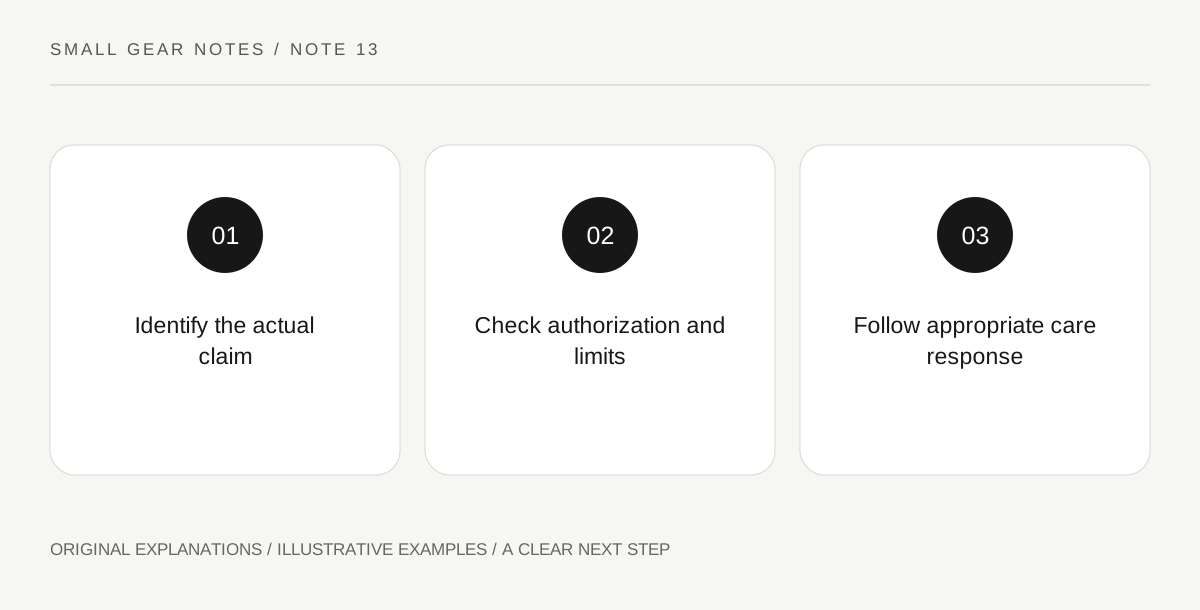
Original explanatory diagram. Read the full method and limitations below.
Identify what the product actually measures
Write down whether the product transmits sound or video, estimates movement or claims to measure a vital sign such as oxygen saturation or heart rate. These are not interchangeable functions. A sales page can mix ordinary convenience features with language that implies medical protection. Ask what specific measurement and use the manufacturer claims, for which ages and under what conditions. Do not infer a medical purpose merely because an app uses a clinical-looking number, nor assume that an ordinary video camera evaluates a baby's breathing.
Read the FDA warning in its proper scope
In its September 2025 safety communication, FDA warned against unauthorized infant devices claiming to monitor vital signs. Inaccurate readings can produce unnecessary care or fail to detect a change that needs attention. FDA also states that no devices have been authorized to prevent SIDS or SUID. A phrase such as registered with FDA is not the same as marketing authorization for a particular intended use. If a child needs monitoring for a clinical reason, ask the treating clinician about an appropriate authorized device and an individual response plan.
Compare access permissions with the household's actual care responsibilities. A relative may need temporary video access while providing care, but that does not imply permanent access to saved recordings or the ability to change alerts. Read the manufacturer's account controls and remove access when it is no longer needed. A shared password can make it difficult to know who has changed settings. These privacy decisions are separate from the medical claim review, but they influence whether a convenience monitor can be used sensibly by the people who rely on it.
Decide how an alert would be handled
A number without an action plan can be confusing, especially at night. For a clinician-recommended device, learn the prescribed setup, limits, troubleshooting and response instructions from the care team. Do not invent thresholds from another family's screenshots. A normal-looking display should not override concern about the baby, and an alert should not be dismissed solely because similar alerts happened before. For urgent symptoms, seek emergency help. A consumer article cannot interpret an individual infant's measurements or determine whether an alarm represents a medical problem.
Evaluate nonmedical operation separately
For an audio or video monitor, consider placement, cords, security updates, access permissions, connection loss and whether another caregiver can use it. Keep all cords out of the child's reach according to safety guidance; do not mount accessories inside a sleep space just for a better camera angle. Check what happens when the network or power fails. Convenience monitoring remains an aid to the household routine. It does not replace adult supervision, an appropriate sleep environment or a medical evaluation when there is a concern.
The reassuring green screen
Illustrative example: a caregiver notices unusual breathing while an app displays a green status. They respond to the baby and seek urgent help as appropriate instead of waiting for the app to change colour. The display is not permission to ignore a concerning observation.
Practical checks
Optional checkboxes save only in this browser.
Questions that come up
Does FDA registration prove SIDS prevention?
No. FDA states that no infant device is authorized to prevent SIDS or SUID. Registration language does not establish authorization for a claimed medical purpose.
Can I choose medical alarm thresholds myself?
For a child who needs clinical monitoring, use the clinician's device and response instructions. Do not copy thresholds from online examples.
References and scope
These sources support the factual background. Examples and exercises are original illustrative teaching material. References do not imply endorsement.
- FDA infant vital-sign monitor safety communication — September 16, 2025 warning against unauthorized vital-sign monitors and unsupported SIDS-prevention claims.
- CPSC safe sleep information — Appropriate sleep products, transfer from seated products and a clear firm flat surface.