Keep bottle components identifiable when replacing a damaged part
A ring can screw onto a bottle while its nipple, valve or seal belongs to a different system. Replacement decisions need more than a visual fit. Keep components traceable to the exact manufacturer's instructions so that a lost or worn piece does not lead to an improvised feeding arrangement.
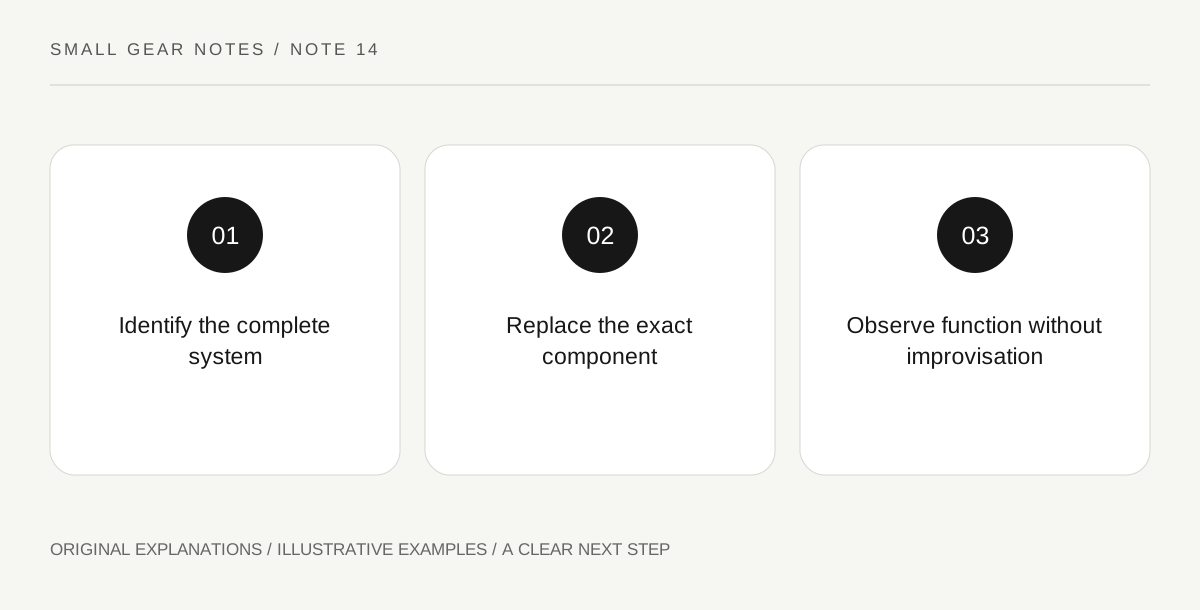
Original explanatory diagram. Read the full method and limitations below.
Map a complete set before mixing storage
Use the manufacturer's diagram to identify the bottle, nipple, collar, valve, seal and cap required for that model. Some systems have fewer pieces, while others rely on a separate venting component. Photograph a correct empty set and keep the product identity with spare parts. If several caregivers use different bottles, separate parts by system rather than sorting every similar-looking ring together. A component that happens to attach may not provide the intended seal or function. Do not assume that a common neck size establishes full compatibility.
Replace by identity and condition
Inspect parts as instructed for damage, wear or deterioration, including pieces that may be less visible once assembled. When a component needs replacement, use the exact model information and manufacturer guidance. Do not stretch, cut or enlarge an opening to imitate a different flow, and do not keep a cracked part in service because it leaks only occasionally. If a replacement package uses a new name or version, ask whether it is approved for the original system. Price and appearance do not resolve a compatibility question.
A replacement inventory can be small and exact. Instead of buying a bag of mixed spare rings and nipples, record which complete system is in use and keep its approved replacement packaging until the identity is clear. Separate retired or uncertain pieces so they cannot be returned to circulation during a hurried wash-up. If the family deliberately changes bottle systems, update the diagram and spare drawer together. This reduces ambiguity without requiring a large collection of accessories or a claim that one brand is best.
Separate mechanical compatibility from feeding response
Even a correct replacement can change the family's routine if the nipple version or labelled flow differs. Do not assume that an age printed on packaging determines what an individual baby needs. If feeding becomes difficult or there are concerns about coughing, intake or growth, ask the child's clinician or a qualified feeding professional rather than making successive product modifications. Observe and describe what changed: the part, the labelled version and the baby's response. A clear account is more useful than declaring that the bottle brand is inherently good or bad.
Preserve the care instructions for each material
CDC advises taking feeding items apart and following manufacturer instructions for cleaning and sanitizing methods. A replacement piece may have different care limitations from the old one, so read its packaging before applying a familiar dishwasher or heat routine. This article concerns identification and replacement rather than a complete cleaning protocol. Keep instructions available to every caregiver and ensure parts can be fully reassembled as designed after care. If a valve disappears into a drain, do not silently omit it because the remaining pieces still screw together.
The almost identical valve
Illustrative example: two bottle systems use small clear valves stored in the same drawer. A caregiver finds one unlabelled spare and cannot establish which system it belongs to. They obtain the identifiable approved replacement instead of choosing by colour or testing the uncertain part during a feed.
Practical checks
Optional checkboxes save only in this browser.
Questions that come up
Does screwing together prove compatibility?
No. Thread engagement does not establish the intended seal, venting or function of the complete system. Follow manufacturer compatibility guidance.
Should I change flow solely by the age on the packet?
Treat packaging as product information, not an individual feeding assessment. Discuss persistent feeding concerns with a qualified clinician rather than modifying parts.
References and scope
These sources support the factual background. Examples and exercises are original illustrative teaching material. References do not imply endorsement.
- CDC infant feeding item hygiene — Separate components, manufacturer care instructions and inspection of feeding equipment.